
Are you tired of dealing with the cumbersome and time-consuming process of securing your DevOps pipeline? Do you feel like you're cons...
Are you tired of dealing with the cumbersome and time-consuming process of securing your DevOps pipeline?
Do you feel like you're constantly battling against security breaches and vulnerabilities? If so, it's time to take a different approach. In this article, I will explore the concept of a self-service centric pipeline security and guardrails, and why it's the key to a more efficient and secure DevOps environment.
First, let me ask you, have you ever found yourself frustrated with the rigid and inflexible security protocols that are in place in your organization?
Many organizations struggle with this issue, as traditional security measures can often be a hindrance to the fast-paced and ever-changing nature of DevOps. However, by embracing a self-service centric pipeline security model, organizations can empower their developers to take a more active role in securing their own pipelines, while still maintaining a high level of security.
Second, let's consider the importance of guardrails in the DevOps process. Guardrails are a set of rules and constraints that are put in place to ensure that developers stay within certain parameters when working on their pipelines. This can include things like ensuring that code is properly tested and reviewed before it is deployed, or that certain security protocols are followed. By implementing these guardrails, organizations can ensure that their pipelines are secure, while also allowing developers the freedom to work in a more agile and efficient manner.
Third, another key aspect of a self-service centric pipeline security model is automation. Automation is a powerful tool that can help organizations to identify and respond to security threats in real-time, while also reducing the workload of developers. This allows developers to focus on their core responsibilities, while also ensuring that their pipelines are secure.
Fourth, it's important to have a centralized management and monitoring of the pipeline security. This can be done by using tools like Security Information and Event Management (SIEM), which allow organizations to monitor and analyze security logs from multiple sources, and identify potential threats. This can also aid in compliance requirements and audits.
Finally, organizations must also consider the importance of training and education in a self-service centric pipeline security model. Developers must be educated on the latest security best practices and technologies, so that they can take a proactive approach to securing their pipelines. This can be done through regular training sessions, or by providing developers with access to online resources and guides.
In conclusion, a self-service centric pipeline security model is the key to a more efficient and secure DevOps environment. By empowering developers to take a more active role in securing their own pipelines, organizations can reduce the workload of developers and improve the overall security of their pipelines. Additionally, by implementing guardrails, automation, centralized management, and education, organizations can ensure that their pipelines are secure, while also allowing developers the freedom to work in a more agile and efficient manner.
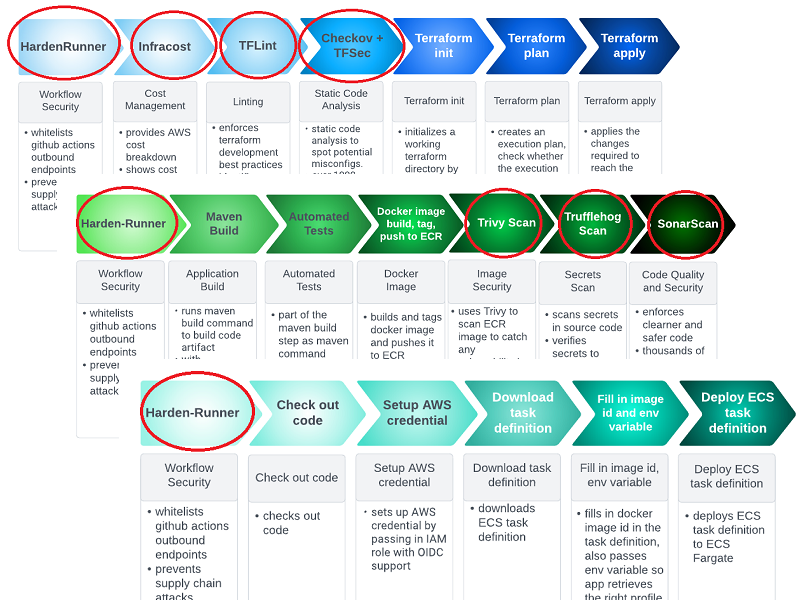
A list of hand-picked actions for security scans and guardrails for your pipelines, infrastructure, source code, base images, and libraries


No comments
Note: Only a member of this blog may post a comment.