
Unveiling the Mirroring of Human Brain Mechanics in AI Systems Cambridge Scientists Revolutionize AI with Neuroscience Insights for Enhanc...
Unveiling the Mirroring of Human Brain Mechanics in AI Systems
Cambridge Scientists Revolutionize AI with Neuroscience Insights for Enhanced Efficiency
In the realm of artificial intelligence (AI) and neuroscience, a groundbreaking study by Cambridge researchers marks a turning point. This exploration not only deepens our understanding of AI but also bridges the gap with human neurology. It's a transformative stride towards integrating the complexity and efficiency of the human brain into the fabric of AI systems.
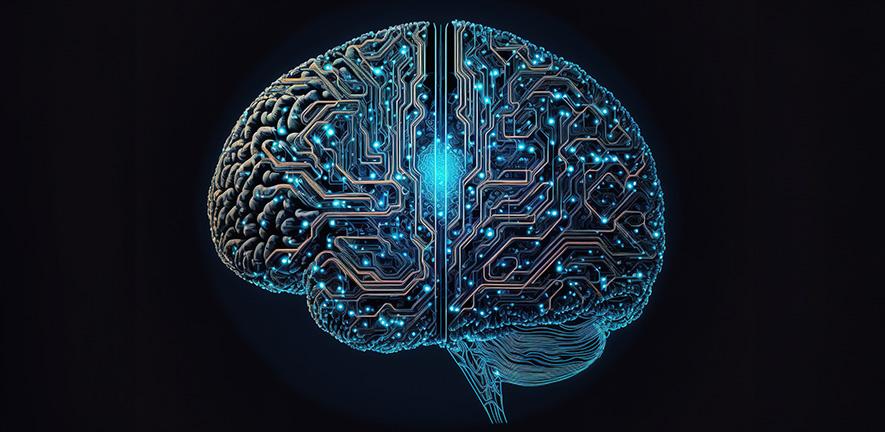
Decoding the Study: The Convergence of AI and Neuroscience
The study, led by Jascha Achterberg, a Gates Scholar at the Medical Research Council Cognition and Brain Sciences Unit (MRC CBU) at the University of Cambridge, in collaboration with Dr. Danyal Akarca, takes a novel approach. They crafted an AI model, a rudimentary reflection of the human brain, incorporating 'physical' constraints akin to those in biological systems. This model uses computational nodes, mirroring the functionalities of neurons, to process and output information.
The Core Concept: Physical Constraints in AI
The researchers introduced a key constraint: each node occupies a specific virtual space, and the communication difficulty between nodes increases with their spatial separation. This mimics the neuronal organization in the human brain, where long-distance connections are resource-intensive. This constraint was pivotal in shaping the AI system's learning and operation processes.
The Experimental Task: Simplified Maze Navigation
The AI was tasked with navigating a simplified maze, a common experimental task for studying animal brains. This involved processing multiple data points - start and end locations, and intermediate steps. Initially, the AI made errors, but through feedback, it gradually refined its problem-solving capabilities.
Emergence of Brain-like Features in the AI System
In response to the imposed constraints, the AI began to exhibit characteristics remarkably similar to human brains:
- Development of Hubs: The AI evolved highly connected nodes, acting as information conduits across the network, mirroring the brain's communication pathways.
- Flexible Coding Scheme: Individual nodes adapted to encode multiple aspects of the maze simultaneously, reflecting the versatile nature of neurons in complex organisms.
Professor Duncan Astle from Cambridge’s Department of Psychiatry highlighted the significance: "This simple constraint led to complex characteristics in the AI, akin to those in biological systems."
Implications for Understanding the Human Brain
This AI model opens new avenues for understanding brain functionality, especially in cognitive and mental health contexts. It allows for experimental manipulation of constraints, offering insights into brain organization in different individuals.
Transforming AI Design: The Road Ahead
The findings hold immense potential for the AI community. As Dr. Akarca notes, this approach could lead to more efficient AI systems, especially in environments with physical limitations. The study suggests that AI systems solving human-like problems might eventually mirror actual brain structures for optimal performance.
Robots with Brain-like Structures
Robots operating in dynamic, resource-constrained environments could benefit from AI systems with brain-like architectures. These 'brains' would need to process vast information streams while managing energy limitations, similar to human brains.
The Cambridge study represents a monumental step in AI development, blending neuroscientific principles with technological innovation. This synergy paves the way for more efficient, brain-like AI systems, capable of tackling real-world challenges with unprecedented adeptness.


No comments
Note: Only a member of this blog may post a comment.