
Documents have shown that before the Chinese government declared Micron Technology, a U.S. corporation, to be a potential risk to national s...
Documents have shown that before the Chinese government declared Micron Technology, a U.S. corporation, to be a potential risk to national security, they had already begun to reduce their purchases of the company’s chips, favoring domestic and South Korean alternatives.
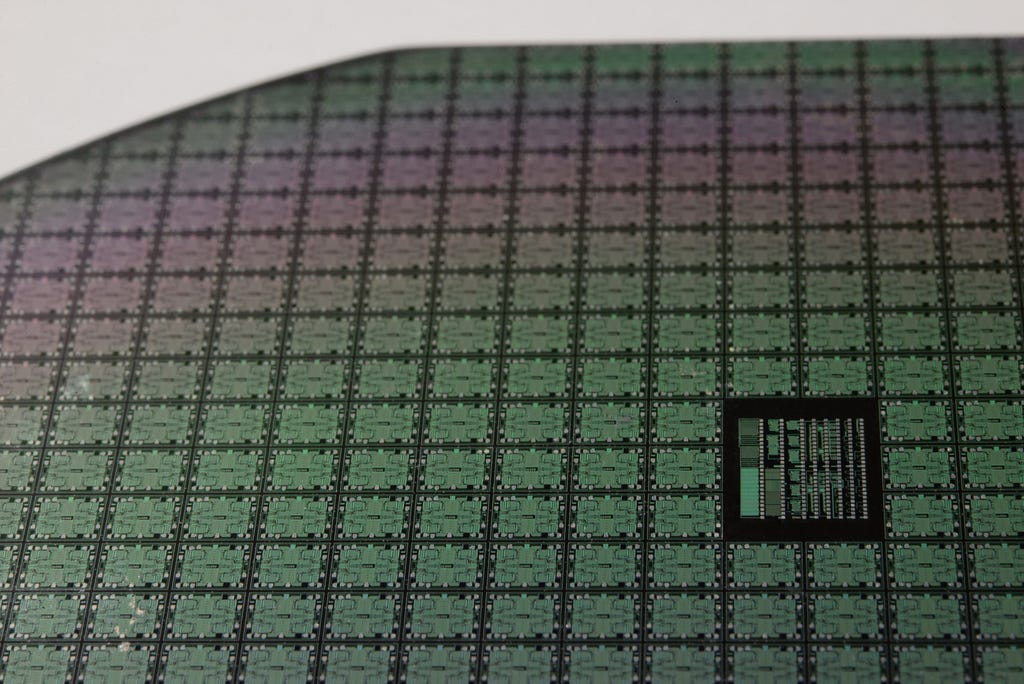
An examination of more than one hundred public government tenders by Reuters showed that while Chinese government agencies used to frequently solicit Micron’s chips for applications such as surveillance networks and taxes systems, there was a sharp decrease in these requests since the start of 2020.
This week, China’s decision to forbid certain industries from using Micron products seemed to be a direct result of the increasing friction between China and the U.S. However, the tender documents imply that the Chinese government had been preparing for this move for years, thereby mitigating the effects of the ban.
Analysts claim that, with China’s own advances in memory chip production, the largest memory chip producer in the USA had become a more susceptible target if Beijing chose to counter US export restrictions on tech.
Alfredo Montufar-Helu, head of the Beijing-based Conference Board’s China Center, observed that a majority of Qualcomm’s chips can be substituted with Chinese-made models, and for those that cannot, there are other foreign companies from which the country can acquire them.
The prohibition of Micron’s offerings does not cause injury to China.
The documents also point to the fact that the Chinese government had already begun to diversify its supply chain in anticipation of future disruptions. For example, the data shows that the government had been increasing its purchases of South Korean memory chips since 2017, while cutting back on those from Micron Technology.
Furthermore, Chinese companies such as Huawei Technologies and Inspur (000977.SZ), along with Uniview and Hikvision (002415.SZ), have been investing heavily in their own domestic production of memory chips in recent years. This could be seen as an effort to reduce their reliance on foreign sources and become more self-sufficient in this industry.
The documents suggest that China’s decision to ban certain industries from using Micron products was not a sudden move, but rather one that had been planned for some time. This is likely why the effects of the ban have been minimised, with other sources available for buyers to acquire their memory chips instead
The agency in charge of managing the internet in China that conducted an evaluation of Micron’s products did not make clear the security threats that were discovered.
When asked by Reuters for a statement, a representative from Micron stated that they are in the process of deciding what their next move will be in response to the ban, but declined to answer any questions related to tenders.
No comment was given by the Chinese State Council when asked for one.
The ban on Micron’s products has raised some eyebrows, as the company has been a major supplier of memory chips to China for many years. The Chinese government’s decision to ban certain industries from using their products could be seen as an effort to increase its own domestic production and become more self-reliant. This could be interpreted as a move away from foreign suppliers in the wake of US export restrictions on tech.
It remains unclear why the Chinese government decided to impose this ban, although it is possible that they discovered some security threats when evaluating Micron’s products. Whatever the reason, it is clear that they have had plenty of time to prepare for this eventuality and are now in a better position than before to handle any disruptions in their supply chain.
DOMESTIC MOTIVATION
In 2020, there was a sharp decline in tenders from government-affiliated entities for Micron products, but it was hard to determine the cause of this, including whether or not the pandemic had an influence.
Over the past three years, only four tenders that included Micron products have been noted. One of these tenders was for two dozen storage devices from a weather bureau located in Changzhou, Jiangsu, while another was from a hospital in Zouping, Shandong, for an image sensor.
Before 2020, Micron’s products were used in a variety of local government projects, including the upgrading of surveillance cameras and facial recognition systems in major cities.
In 2019, Dongguan’s police authorities put forth two large tenders, one worth 187 million yuan and the other 29 million yuan, and Micron chips were among the many items purchased. The total came to $27.05 million.
In August 2015, a tender revealed that the China National Tax Administration shelled out more than 5.6 million yuan in order to buy around 8,000 Micron processors for its invoice system servers.
For more than ten years, China has been pursuing a policy to reduce their dependence on foreign technologies. This has seen state-run businesses, such as banks, switch to domestic software, and the promotion of local chip production.
In 2020, Beijing’s officials started an intensified campaign to pursue a “dual circulation” development model in order to reduce dependence on foreign markets and technology.
The tenders from the past year had asked for products to be “domestically manufactured”.
For illustration, the municipality of Taishan in the south of the country had a January tender for a “smart public security” project, allotting approximately 200,000 yuan to procure flash memory chips domestically produced.
The project is constructed out of a multitude of hardware and software components, with Hikvision providing 41 of them, Huawei 16, and the remainder of 288 coming from domestic producers.
To guarantee that confidential information is not disclosed, government procurement records may censor specific details, and further insight into Micron requests can be obtained through subscription-based private tender databases.
Government contracts continued to feature chips made by SK Hynix (000660.KS) and Samsung Electronics (005930.KS) of South Korea, but they were mostly used to supplement domestic products.
Despite this, American companies are still major contributors, providing government entities with Intel (INTC.O) chips, Nvidia (NVDA.O) graphics processors, and Dell (DELL.N) servers since the beginning of 2020.
The decrease in orders from the Chinese government for chips manufactured by Micron Technologies has added to the company’s difficulties in the country.
Back in 2018, Micron Technology found itself embroiled in a legal battle with Fujian Jinhua, a Chinese chip manufacturer that was backed by the state, alleging that they had conspired to pilfer trade secrets.
In 2018, the disagreement resulted in a temporary suspension of Micron’s primary goods sales in China, and in 2019, the DRAM operations in Shanghai were shut down due to the intensifying trade clash between China and the United States.
In Fiscal 2017, China produced half of Micron’s $20 billion in revenue, however, that proportion has now dropped to a mere 16%.
Analysts such as Montufar-Helu have noted that Micron has been undergoing a tumultuous period, especially in regard to its operations in China, for a lengthy time period.
On Monday, Micron predicted a minor decrease in revenue due to actions taken by China, estimated to be in the single digits.
The rate of 1 Chinese yuan in comparison to the US dollar is 6.9121.
The Chinese government’s decision to move away from chips manufactured by Micron Technologies has significantly impacted the company’s operations in the country. This has been evidenced by the reduction in orders for Micron products, as well as the temporary suspension of its primary goods sales and the closing of its DRAM operations in Shanghai. With China contributing half of Micron’s $20 billion revenue in Fiscal 2017, this proportion has now dropped to just 16%.
Analysts have voiced their concerns about this turbulent period for Micron, particularly with respect to its Chinese operations. In response, the company announced on Monday that it expects a minor decrease in revenue due to actions taken by China, estimated to be in the single digits. This would equate to an approximate loss of 200,000 yuan based on current exchange rates of 6.9121 yuan per US dollar.
Conclusion
It is clear that the Chinese government’s decision to move away from products manufactured by Micron Technologies has had a significant impact on the company’s operations in the country. This has been demonstrated through a decrease in orders, a temporary suspension of its primary goods sales and the closure of its DRAM operations in Shanghai. With China having contributed half of Micron’s $20 billion revenue in Fiscal 2017, this proportion has now dropped to just 16%. While Micron is expecting a minor decrease in revenue due to actions taken by China, only time will tell how much this will truly cost them.
Decreasing Demand for Micron Chips Seen in China Years Prior to Ban was originally published in The Technology on Medium, where people are continuing the conversation by highlighting and responding to this story.


No comments
Note: Only a member of this blog may post a comment.